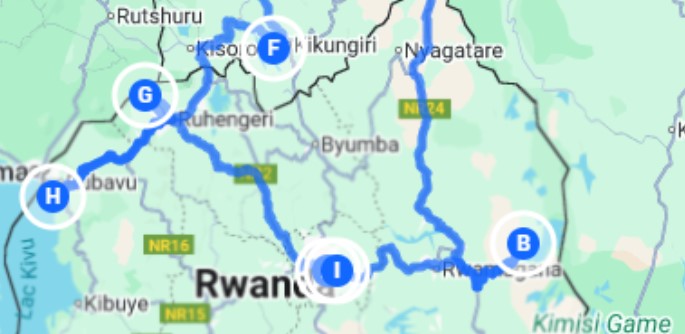

Day 2 | Kigali – Akagera National Park
Early start to the Akagera National Park. The Highlands, home to the shy Oribi and to the elusive Topi, afford breathtaking views of the undulating hills, rolling grassland and the extensive series of lakes linked by papyrus swamps.
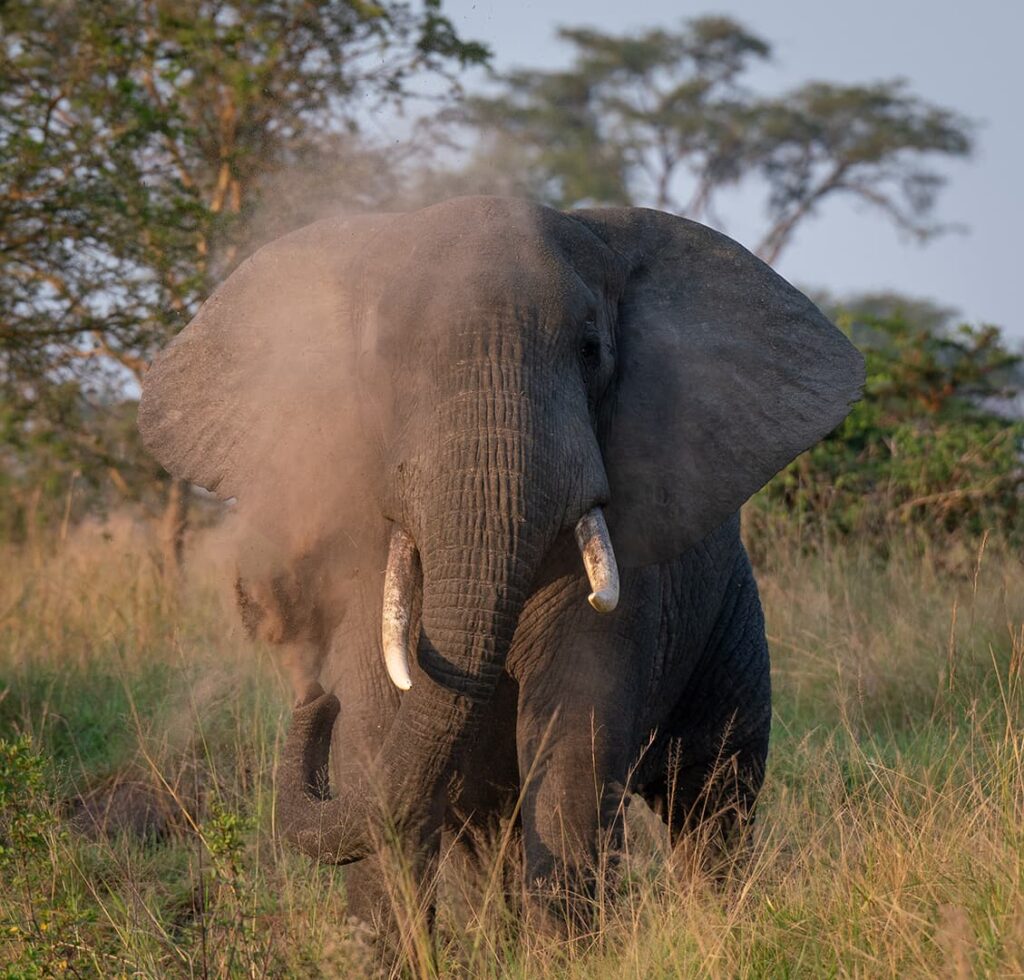
Elephant, Buffalo, Giraffe, Zebra, and Waterbuck are some of the game roaming this peaceful heaven. There is also an abundance of remarkable bird life with over 500 bird species to be observed in the many diverse habitats of the park.


Day 3 | RWANDA – UGANDA
A good road links Kayonza with the border post of Kagitumba. On the Ugandan side, the road winds through the beautiful hillside that characterizes much this southern region of the country. Lunch at Mbarara. Continue via Ibanda to Kibale National Park.


Day 4 | KIBALE National Park - Chimpanzes Trekking and Bigodi Swamps
Chimpanzee trekking in Kibale National Park is one of Uganda’s most rewarding wildlife experiences. Accompanied by expert rangers, you venture into the dense tropical forest at dawn, listening to the calls of birds and primates as you track a habituated chimpanzee group. Once located, you spend an unforgettable hour observing their behavior—watching them feed, groom, play, and interact within their natural habitat.
Kibale is home to over 1,500 chimpanzees and 12 other primate species, making it the primate capital of East Africa. The trek offers both adventure and intimacy, combining scenic forest walks with close encounters with our closest relatives.
In the afternoon visit Bigodi Swamps. Bigodi Swamp, located just outside Kibale National Park, is a community-run wetland sanctuary renowned for its rich biodiversity and conservation success. This tropical swamp is home to over 200 bird species, including the rare Great Blue Turaco, making it a paradise for birdwatchers.
Wooden boardwalks and guided nature trails lead visitors through lush vegetation, where eight primate species such as red colobus monkeys, black-and-white colobus, and grey-cheeked mangabeys can often be spotted. The swamp also shelters butterflies, reptiles, and unique plant life. Beyond wildlife, the project supports local communities, offering cultural encounters and demonstrating sustainable eco-tourism at its best.


Day 5/6/7 | QUEEN ELISABETH National Park
The Rwenzoris form a majestic backdrop, as we cross the Equator and enter Queen Elisabeth National Park. Explore a few of the crater lakes typical for this region. Two full days of game viewing. The shores of Lake Edward are the mating grounds of the Ugandan cob and home to the elephant and hippo.
Lions and leopards prefer the Ishasha savannah, where you will spend the night on day 7. There are thousands of birds everywhere. With a bit of luck, you might catch a glimpse of the rare Shoebill Stork during the especially rewarding launch cruise along the Kazinga Channel which links Lake Edward and Lake George.
On day 6 boat ride on the Kazinga Channel.


Day 8 | Rift and Highlands
After a last early morning game drive, take a guided nature walk.
In the afternoon, climb the Albertine rift escarpment to arrive at Lake Bunyonyi.


Day 9 | Southwestern Uganda
A dugout canoe tour on Lake Bunyonyi is a peaceful and authentic way to discover Uganda’s most scenic lake. Surrounded by terraced hills and dotted with 29 islands, the lake is free of hippos and crocodiles, making it safe for exploration..
After lunch we take the steep road to Kisoro, lying on the foot of the majestic Virunga Volcanoes Range. Cross into Rwanda and arrive at Kinigi.


Day 10 | VOLCANOES NP: Tracking the Mountain Gorillas
After waking at sunrise, there is short drive to the park headquarters, where briefings, porters and coffee awaits before stepping into the cool forests to begin the adventure. Guides help steady the pace, with stops for water, signs of gorillas and a chance to soak up the views of the valleys below.
As the first light of dawn breaks through the curtain of mist clinging to the summits of Karisimbi, Bisoke, Sabyniyo, Gahinga and Muhabura, we make our way into the Parc National des Volcans. Tracking the gorillas through the unique vegetation can take several hours of challenging walking in wet and muddy conditions.
Once you reach the gorillas, you can spend an hour with them and be back at base in time for a late lunch! To see gorillas, the trek will have been worth the hardship.


Day 11 | VOLCANOES NP: Optional Additional Activities
Day 11 offers optional activities in Volcanoes National Park before continuing to Lake Kivu. Choices include a second gorilla trek, golden monkey tracking, climbing Mount Bisoke with its stunning crater lake, or visiting Dian Fossey’s Karisoke Research Center and grave. The Fossey hike is a powerful journey through lush forests, offering wildlife sightings and insight into her pioneering conservation work and legacy protecting mountain gorillas.
Each option provides unique experiences, from breathtaking scenery to encounters with endangered species. In the afternoon, travel to Rubavu on Lake Kivu’s northern shore for dinner and overnight at Paradise Malahide Resort.


Day 12 | Lake Kivu - KIGALI
Enjoy during the early morning hours the peaceful atmosphere of the calm and pristine waters of Africa’s highest lake. Return to Kigali. Lunch and airport transfer.
Safe travels and see you on your next adventure!

Accommodation
Where You’ll Stay
The excellent hotels listed in the itinerary serve as examples of the standard of accommodation offered on the trip.
In cases where the listed hotels are not available, you will be offered hotels or lodges of an equivalent standard.


The excellent hotels listed in the itinerary serve as examples of the standard of accommodation offered on the trip. In cases where the listed hotels are not available, you will be offered hotels or lodges of an equivalent standard.
Everything You Need to Know
When is the best time to visit?
Rwanda: Best months are June–September and December–February (dry seasons). Roads are easier, treks less muddy.
Uganda: Same cycle — June–August and December–February.
Gorilla trekking is possible year-round, but rainy months (March–May, Sept–Nov) make trails slippery.
What can I expect from a safari with African Safaris Experts?
Expect a seamless, high-end experience combining thrilling wildlife encounters with comfortable, hand-picked lodges and professional local guides. Every detail is curated—from scenic game drives in private 4×4 vehicles to cultural visits with local tribes and personalized service throughout the journey.
Can I personalize my safari and beach itinerary?
Absolutely. All our trips are fully customizable. Whether you’re traveling as a couple, family, or private group—we tailor every element to your interests, including dates, accommodations, pace, and even special experiences like hot air balloon rides or beach dinners in Zanzibar.
Will I see gorillas and other key wildlife?
Rwanda: Almost guaranteed gorilla sightings in Volcanoes National Park (high success rate). Also golden monkeys, Nyungwe chimpanzees, Akagera Big Five (lions, elephants, rhinos, leopards, buffalo).
Uganda: Also near-guaranteed gorilla sightings in Bwindi or Mgahinga. More diversity: chimpanzees (Kibale), tree-climbing lions (Ishasha), Murchison Falls safaris, birdlife, plus hippos, elephants, giraffes.
Is it safe for travelers?
Rwanda: One of the safest countries in Africa; very organized, clean, low crime rate. Kigali is often ranked among Africa’s safest capitals.
Uganda: Generally safe in tourist areas and parks, though road conditions and long travel times can be more challenging.
Do I need a visa to enter?
Rwanda: Most travelers need a visa(≈50 USD) -exempted francophonie members and commonwealth members country. Visa delivered at the arrival without any prior request.
Uganda: E-visa required (≈50 USD).
Yellow fever vaccination is compulsory if you want to enter Uganda.
An East Africa Tourist Visa is useful if you plan to combine the two countries.
What should I pack for my safari and beach stay?
Clothing: Neutral-colored, lightweight clothes for safari. Long sleeves & pants for treks (to protect from thorns/insects).
Shoes: Waterproof hiking boots for gorilla trekking (trails can be steep and muddy).
Gear: Rain jacket, hat, sunscreen, insect repellent, gloves (for grabbing vegetation while trekking).
Essentials: Refillable water bottle, small backpack, binoculars, camera with extra batteries.
Optional: Gaiters for muddy conditions, walking stick (parks sometimes provide).